
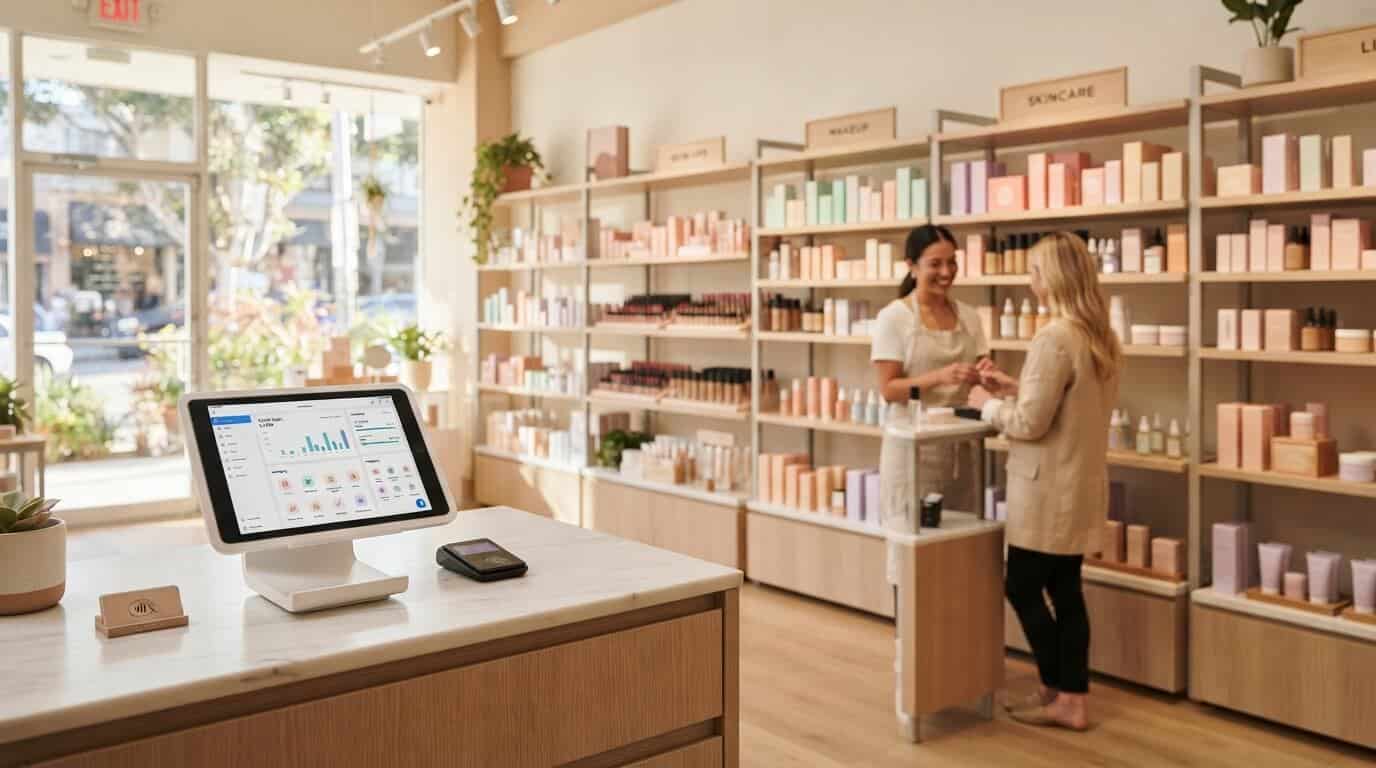
Running a cosmetics store involves more than ringing up sales. Shades, batch numbers, expiry dates, testers, and fast-changing trends all need to be tracked at the same time. A cosmetics store POS system has to handle this level of detail without slowing down the checkout line. This is where VitePOS is built to fit the daily routine of beauty and skincare retailers, from single boutiques to multi-branch chains.
This article looks at what a cosmetics business actually needs from its point-of-sale software, and how VitePOS, as a cosmetics store POS system, addresses each of those needs in practice. Store owners searching for the best POS system for makeup stores usually run into the same short list of requirements, and this guide goes through them one at a time.
What Cosmetics Stores Need From a POS System
Choosing a cosmetics store POS system starts with understanding how cosmetics retail is different from general retail in a few concrete ways. Products come in many variants (shade, size, formula), some items expire, and customers often expect personalized service such as loyalty points or sample tracking. A generic cash register or a basic POS software module is usually not built for this.
This is also where the question of how to choose a POS for cosmetics business operations usually starts, since the requirements below apply whether a store has one location or several.
A proper cosmetics store POS system needs to support:
- Variant-level inventory (shade, size, batch)
- Expiry date tracking for skincare and makeup
- Barcode scanning for fast checkout
- Customer profiles and purchase history
- Discount and bundle pricing for seasonal offers
- Reporting broken down by category, brand, and staff
VitePOS is designed around these requirements rather than treating cosmetics as an afterthought category inside a general retail template.
Inventory Management for Cosmetics Products
Inventory management for cosmetics stores is one of the areas where a generic POS system tends to fall short. Cosmetics inventory is rarely simple, which is the main reason inventory management for cosmetics stores is treated as its own category inside VitePOS rather than a single generic stock list. A single lipstick line might have ten shades, three sizes, and two formulas, each with its own stock count. VitePOS allows store owners to manage inventory at the variant level, so staff can see exactly how many units of a specific shade are left, instead of a combined total for the product line.
Good inventory management for cosmetics stores also needs to track expiry dates, since skincare and makeup products have shelf lives. VitePOS lets staff record expiry dates at the time of stock entry, and the system can flag items that are close to expiry so they can be moved to a clearance shelf or returned to the supplier before they become unsellable.
For stores that carry testers, VitePOS separates tester stock from sellable stock in the inventory count, which keeps sales reports accurate and prevents testers from being counted as available inventory. This is one of several VitePOS features built specifically around how cosmetics products are displayed and sold in a physical store, rather than adapted from a general retail template.
Barcode and SKU Tracking for Beauty Products
Barcode scanning is a basic requirement for any point of sale system for cosmetics, since fast checkout matters in a retail environment where customers may be buying five or six small items at once. VitePOS supports barcode scanning for every SKU, including individual shades and sizes, so cashiers do not need to search through a list manually.
For stores that receive products without factory barcodes, VitePOS can generate and print custom barcodes, which is common practice among smaller cosmetics retailers who repackage or private-label products. This keeps the checkout process consistent whether the product is a national brand or an in-house line.
Because this point of sale system for cosmetics ties barcodes directly to inventory records, stock counts update automatically with every sale, which reduces the manual recounting that many small stores still rely on.
Customer Database and Loyalty Programs
Repeat customers matter in cosmetics retail, since many shoppers return for refills of the same shade or product line. VitePOS keeps a customer database that records purchase history, so staff can quickly check what a customer bought last time, whether that is a specific foundation shade or a skincare routine.
This customer data connects to a built-in loyalty program, where points can be earned per purchase and redeemed for discounts. Store owners can set the point value and redemption rules themselves, rather than relying on a fixed structure.
This kind of retail POS software feature is particularly useful for cosmetics stores because shade-matching and product preference are personal; having that history on file saves time for both staff and customers during return visits. It is also one of the features that separates a general small business POS system from one built with cosmetics retail in mind.
Sales Reporting and Analytics
Understanding which products sell, at what time, and to which customer segment is part of running a cosmetics store efficiently. VitePOS generates reports by product, category, brand, and staff member, which lets store owners see which lines are moving and which are sitting on the shelf.
For a cosmetics store POS system, category-level reporting matters because cosmetics inventory spans several categories (makeup, skincare, haircare, tools) that often need separate reordering schedules. VitePOS reports can be filtered by these categories, so restocking decisions are based on actual sales data rather than guesswork.
Daily, weekly, and monthly sales summaries are available directly from the dashboard, and reports can be exported for further review or shared with accounting staff. For inventory management for cosmetics stores specifically, this reporting layer is what turns raw stock data into a usable reorder plan.
Multi-Store and Multi-Location Support
Cosmetics retailers that grow beyond a single location need a cosmetics store POS system that keeps data connected across branches. VitePOS supports multi-store management from one dashboard, so inventory levels, sales, and customer records are visible across all locations rather than siloed in separate systems.
This matters for a cosmetics store POS system because stock transfers between branches are common in this industry, especially when one location runs low on a popular shade while another has surplus stock. VitePOS allows staff to record and track these transfers directly within the system.
Store owners can also compare performance between branches using the same reporting tools used for single-location reports, broken down by location.
Staff Management and Access Control
Part of running any cosmetics store POS system well is controlling who can access what. Cosmetics stores often rely on part-time or shift-based staff, particularly during sales seasons, which is another reason a dedicated cosmetics store POS system helps rather than a shared login used by everyone. VitePOS includes staff account management with role-based access, so store owners can control what each staff member can see or change in the system.
For example, a cashier role may only have access to the checkout screen, while a manager role can view reports, adjust prices, and manage inventory. This kind of access control reduces the risk of accidental changes to stock records or pricing, which is a common issue in busy retail environments with rotating staff.
Attendance and shift logs can also be tracked through the same point of sale system for cosmetics, which removes the need for a separate timekeeping tool in smaller stores.
Discounts, Bundles, and Promotions
Seasonal promotions are common in cosmetics retail, from holiday gift sets to buy-one-get-one offers on skincare lines, and a flexible point of sale system for cosmetics needs to support these changes without manual price overrides at the register. VitePOS allows staff to set up discounts, bundle pricing, and time-limited promotions directly in the system, rather than manually adjusting prices at checkout.
Among the VitePOS features used most by seasonal promotions, bundles can combine multiple SKUs, such as a cleanser, toner, and moisturizer set, priced differently from buying the items separately. VitePOS tracks these bundle sales separately in reports, so store owners can see how bundled promotions perform compared to individual product sales.
This flexibility is useful for a cosmetics store POS system, since pricing structures in this industry change frequently around holidays, product launches, and clearance periods.
Payment Processing and Hardware Compatibility
As a cosmetics store POS system, VitePOS supports multiple payment methods, including cash, card, and mobile payment options, which is necessary for stores serving a range of customer preferences. The system is compatible with standard POS hardware such as receipt printers, cash drawers, and barcode scanners, so stores do not need to replace existing equipment when switching to VitePOS.
Split payments and partial refunds are also supported, which is useful when customers return part of a bundled purchase or split a bill between cash and card.
Cloud-Based Access and Data Security
VitePOS runs on cloud infrastructure, which means store owners can check sales data, inventory levels, and reports from outside the physical store location. This is a standard part of most modern retail POS software, but it matters for cosmetics stores that manage supplier orders or staff schedules while away from the counter. This is useful for owners managing multiple cosmetics stores or working remotely between locations.
Data is backed up automatically as part of this cosmetics store POS system, reducing the risk of losing sales and inventory records due to hardware failure at the store. Access to the system is controlled through the role-based permissions mentioned earlier, which limits exposure of sensitive data such as customer information and sales figures to authorized staff only.
Integration With Accounting and E-commerce
Many cosmetics retailers also sell online in addition to their physical store, which is another point where a cosmetics store POS system needs to keep both channels in sync. VitePOS can connect with e-commerce platforms so that inventory counts stay consistent between the online store and the physical location, reducing the chance of overselling a product that is low in stock.
Integration with accounting tools also means sales data does not need to be manually re-entered for bookkeeping, which saves time for store owners handling their own accounts or working with an external accountant.
VitePOS for Beauty and Skincare Stores Specifically
Not every retailer sells the same mix of products, and VitePOS for beauty and skincare stores is set up slightly differently than the default configuration used for general retail. Skincare items, for example, tend to have shorter shelf lives than makeup, so the expiry alert settings can be adjusted separately by category. Haircare and tools, on the other hand, rarely expire but often come in multi-packs, which VitePOS handles through its bundle and case-quantity settings.
This category-aware setup is another example of a POS system with inventory tracking for beauty products built around real store layouts, meaning a store that carries makeup, skincare, and haircare in the same location does not need three separate systems or manual workarounds. The same cosmetics store POS system applies different rules automatically based on how each category has been tagged during setup.
POS System With Inventory Tracking for Beauty Products
A POS system with inventory tracking for beauty products needs to go beyond a simple stock count. Beauty products often move between a sales floor, a stockroom, and sometimes a separate testing area, and VitePOS keeps a record of where stock sits at each stage. When a shipment arrives, staff log it into the system with batch and expiry details, and from that point forward, every sale, transfer, or write-off updates the same record.
This is exactly the kind of POS system with inventory tracking for beauty products that reduces manual paperwork, and it matters for return and exchange requests as well. If a customer wants to exchange a foundation shade, VitePOS can process the return and update inventory for both the returned item and the replacement in a single transaction, rather than requiring two separate manual entries.
Affordable POS Software for Cosmetics Retailers
Cost is often the deciding factor for smaller cosmetics retailers comparing systems. VitePOS is positioned as affordable POS software for cosmetics retailers that need the features described above without paying for enterprise-level tools built for much larger retail chains. Pricing tiers are based on store size and location count, so a single-location boutique is not paying for multi-store features it does not use.
For store owners weighing VitePOS against other small business POS system options, the main comparison points tend to be variant-level inventory support, expiry tracking, and the cost of adding additional locations later if the business grows.
Pricing and Support
VitePOS offers different pricing tiers based on store size and the number of locations, which allows a single boutique and a multi-branch chain to each choose a plan that matches their needs. Support is available for setup, including initial product catalog import and staff training on the system, so store owners are not left to figure out the full range of VitePOS features on their own.
For a cosmetics store POS system, onboarding support matters because moving from paper records or a basic register to a full POS system involves migrating existing inventory data, which can be time-consuming without guidance. This is part of why VitePOS is described as affordable POS software for cosmetics retailers rather than a system priced only for large chains with dedicated IT staff.
How to Choose a POS System for Your Cosmetics Store
Anyone working through how to choose a POS for cosmetics business operations, whether new or established, should look at a few practical points before deciding:
- Variant tracking — Can the system handle shade, size, and batch-level inventory separately?
- Expiry management — Does it flag products approaching their expiry date?
- Hardware compatibility — Will it work with existing scanners, printers, and card readers?
- Multi-store support — Is branch-level reporting and stock transfer available if the business grows?
- Reporting depth — Can sales be broken down by category, brand, and staff member?
Checking these points against any retail POS software option, including VitePOS, gives a clearer picture of whether the system fits the specific demands of a cosmetics business rather than a general retail setup. This same checklist works whether the store is looking for a cosmetics store POS system for one location or comparing several small business POS system options for a growing chain, and it is also a reasonable starting point for anyone specifically researching the best POS system for makeup stores.
Conclusion
Cosmetics retail comes with specific inventory and customer management needs that general POS software does not always address well. VitePOS is built around variant-level inventory, expiry tracking, loyalty programs, and multi-store support, which are the features that matter most for a cosmetics store POS system used daily by beauty and skincare retailers.
Whether a store is comparing this against other retail POS software, looking specifically for the best POS system for makeup stores, or simply trying to work out how to choose a POS for cosmetics business operations of a particular size, the same core checklist applies: variant tracking, expiry alerts, loyalty tools, and reporting that matches how cosmetics products are actually sold. Store owners evaluating a cosmetics store POS system should weigh these specific features against their store’s size and growth plans before choosing a system, and confirm that the small business POS system they pick can still support a point of sale system for cosmetics if the store adds locations later.

